
Most shuttle buses look identical on a spec sheet. The differences that decide what your bus costs you in year five are under the panels — here's how to find them.
If you've been comparing shuttle buses, you've probably noticed something: a lot of different brand names, with spec sheets that read almost word-for-word the same. There's a reason for that — much of the industry shares the same construction methods and, in many cases, the same production lines.
The price quote tells you what the bus costs on day one. The build tells you what it costs in year five. Here are seven things to look at — on any bus, from any builder, including ours.
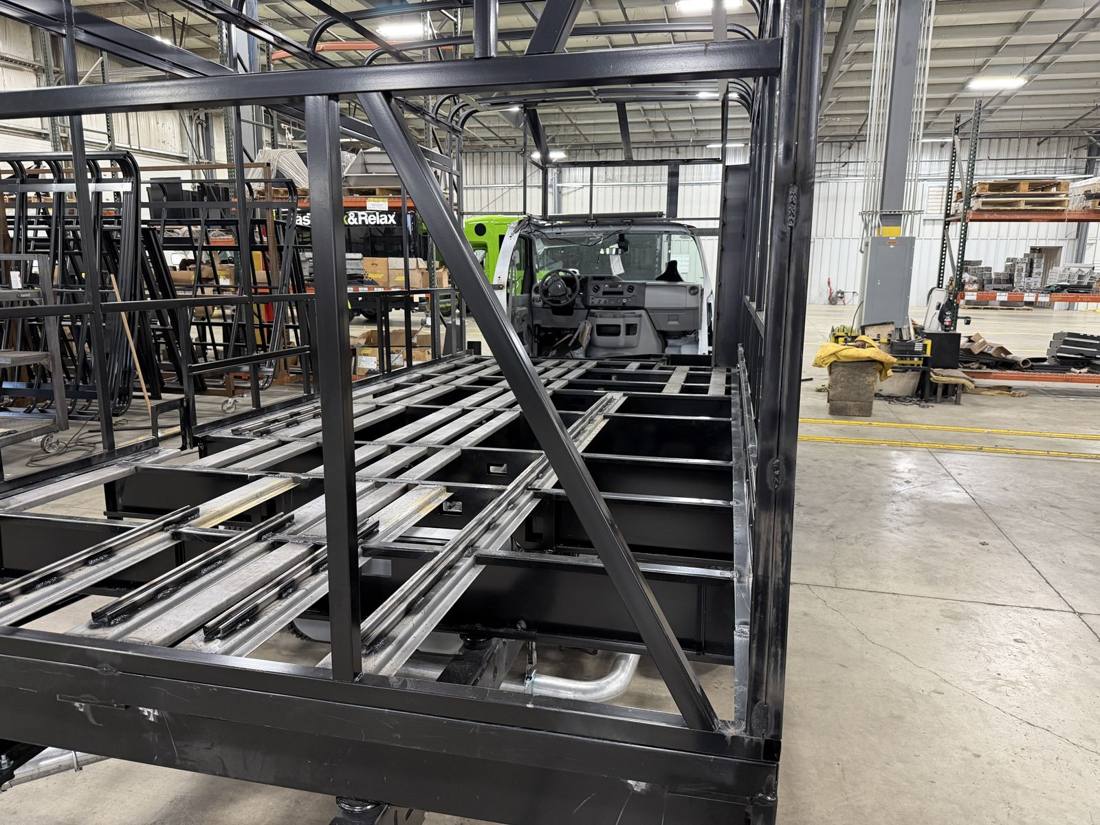
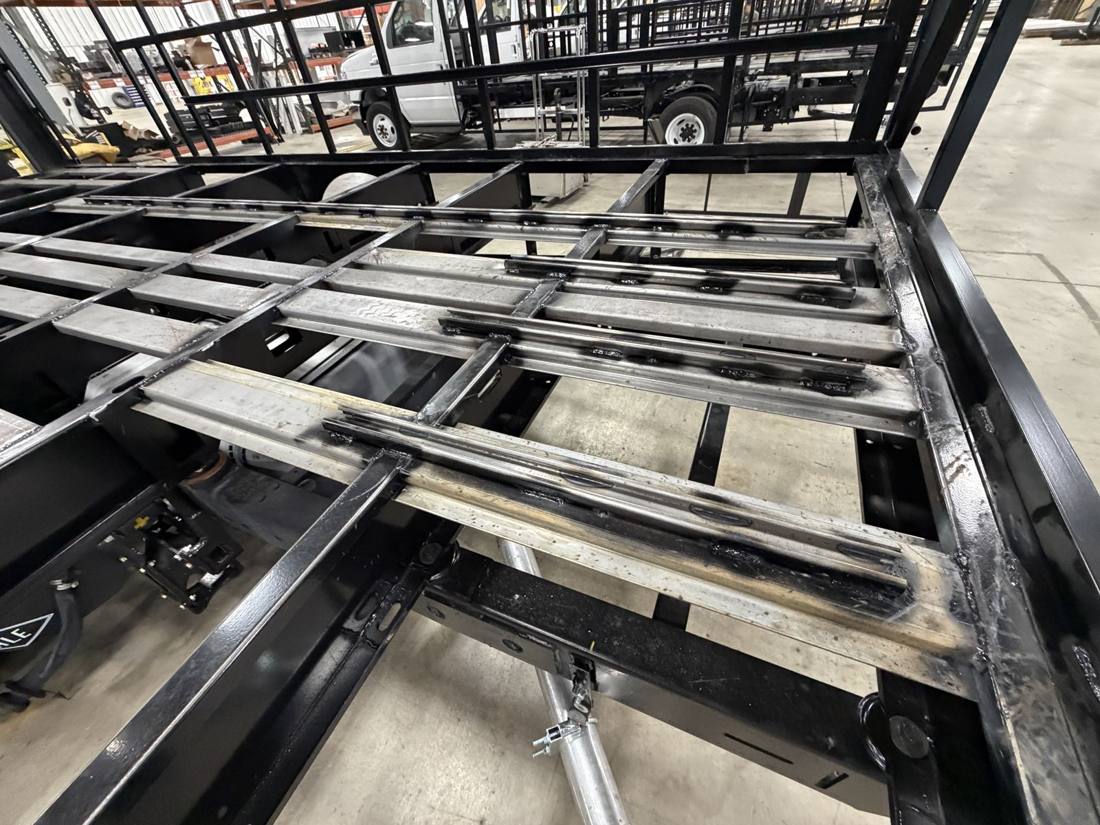
Most shuttle bus frames are sprayed with red oxide primer — on the surfaces you can see. It doesn't reach inside the tube crevices, and it scrapes off with a fingernail (put a piece of tape on it and pull — the primer comes with it). Rust starts where you can't see it and shows up as a soft floor or a stained ceiling three years later.
Every steel structural component in an HLE bus is sandblasted, chemically washed and rinsed, and then powder coated at 400°F. The powder is magnetically charged — it wraps into every crevice. That's the same finish standard used on equipment meant to live outdoors for decades.
On most shuttle buses, the sidewall isn't one panel — it's built up from separate pieces: one strip above the windows, an individual filler between each window, one strip below the windows, and a separate fiberglass skirt screwed on below the floor line. Every one of those joints is a place for water to get in — and the one at the floor line sits exactly where road water hits hardest. When it loosens — and screwed panels loosen — water gets behind it.
HLE builds the sidewall as one continuous piece, roofline to skirt — straight down past the window line — pressure-laminated and welded to the structure at the skirt. No beltline seam, no floor-line seam, because the panel doesn't stop. Fewer seams means fewer places for water to get in, and no beltline molding means no rust line forming under one. The shell is stiffer, and the bus is noticeably quieter and tighter for the driver at highway speed.
Ask anyone who maintains a shuttle fleet what kills a bus, and you'll hear the same answer: the floor. The typical subfloor is a half inch of standard plywood — and plywood absorbs water and rots. By year four, that's a soft floor, loose seat tracks, and a bus that's done.
HLE uses 5/8" PerformMAX 500, a resin-infused subfloor that sheds water instead of absorbing it. Pour water on it and the water beads and runs off. We're the only shuttle bus manufacturer using it — and we warranty the subfloor for 7 years.
Most shuttle roofs are thin fiberglass-reinforced panel — about 1/8" — and it's brittle. Bend a piece in your hand and it snaps, and it only gets more brittle as the sun works on it year after year. Hail, low branches, a drive-through clearance bar: that's a cracked roof and a water problem.
The HLE roof is Impact Guard composite. Hand someone a sample and they can fold it back on itself without cracking it. When you visit the factory, we'll hand you a piece and let you try to break it. Nobody has.
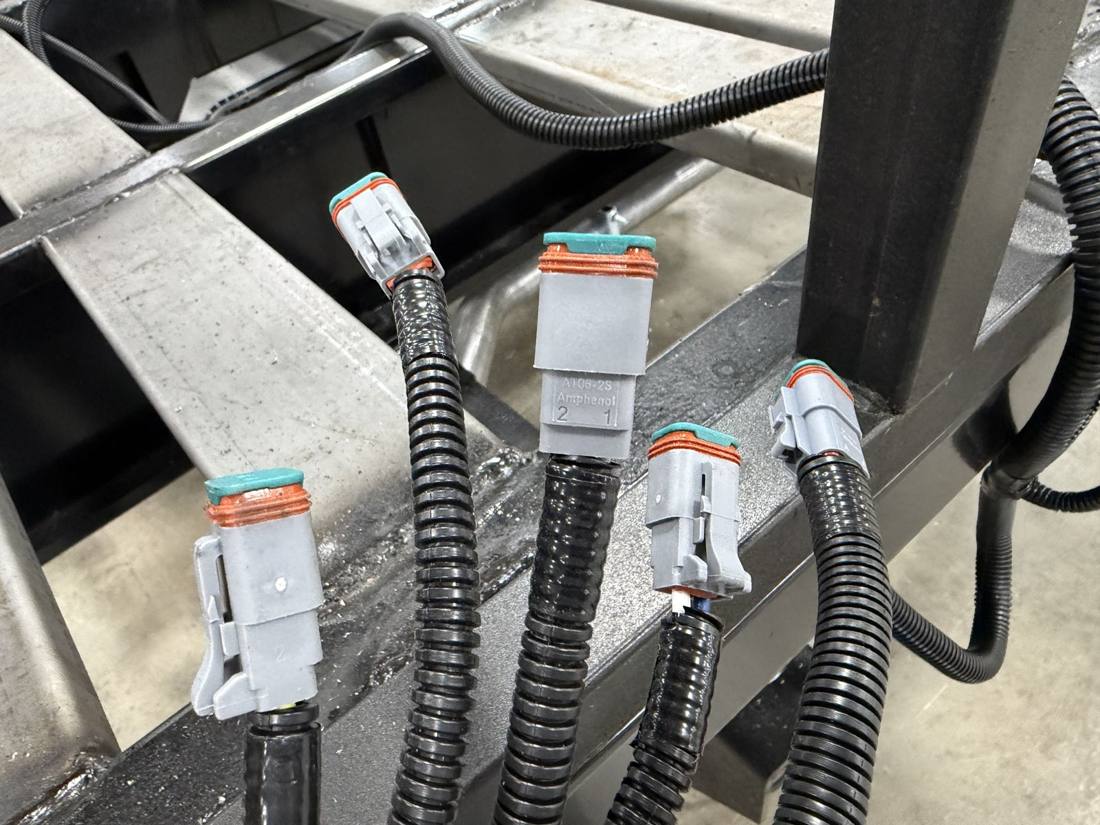
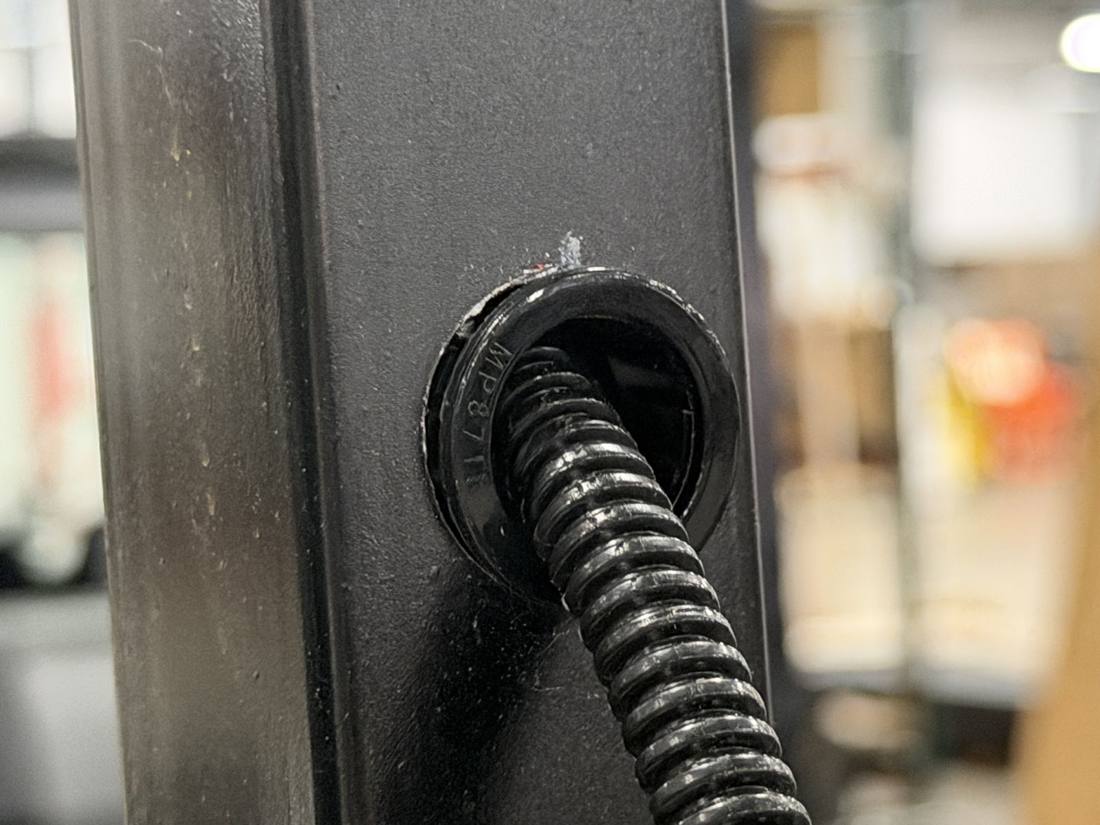
Wiring is where cheap construction hides best — butt connectors and tap splices that vibrate loose and corrode. The real cost isn't the $2 part. It's that when one of those connections fails inside the wall, you've got a hidden short somewhere in the structure — and finding it can mean hours of diagnosis and tearing the interior wall off the bus to reach it. There's no easy way in. HLE builds every wire harness in-house with watertight, marine-grade connectors, fully wire-loomed so no bare wire is exposed anywhere on the bus. Butt connectors and tap splices aren't just discouraged in our factory — they're banned, so there's nothing buried in the wall waiting to vibrate loose. Lights ship pre-plugged. Every connection on the bus gets corrosion-resistant spray, not just the battery posts.
Every HLE bus goes into a rain booth — a minimum of 15 minutes under full spray, longer when a bid spec calls for it, with a person inside actively hunting for leaks. (The water is recycled, for the record.) The moment it comes out, it's driven straight into a 25-mile road test with hard braking and acceleration — no sitting and drying first — so any water that found its way in gets shaken loose where we can find it. Every bus. Before delivery. Then a final inspection packet signs off every department.
A warranty isn't one number — it's a document, and the words matter more than the headline. A lot of shuttle bus warranties read "5 years / 100,000 miles" on the cover, then, inside, cover only the conversion workmanship: no structural clause, no separate floor coverage, and paint that prorates down to a quarter of its value by year five. HLE hands you three separate warranties instead of one. Read the documents, not the headline:
| Coverage | HLE | A typical shuttle conversion warranty |
|---|---|---|
| Warranties you get | Three: a 3-yr/36K general, a 5-yr/100K structural body, and a 7-yr subfloor | One 5-yr/100K conversion warranty |
| Structural body | Yes — 5 yr / 100,000 mi | Often no structural clause — conversion workmanship only |
| Subfloor | 7 years | No separate subfloor warranty |
| Paint | Corrosion protection is built into the structure — powder coat, not a paint line-item | Paint coverage that prorates — down to ~25% by year 5 |
A bus that's still solid in year seven costs less than a bus you replace in year four — even when it costs more on day one. That's not a slogan; it's the reason our subfloor warranty runs to seven years and our test cycle is built around a minimum seven-year service life — take care of the bus and we expect you to run it well past that. We also put our bus through the current federal Altoona 7-year/200,000-mile durability test — the version that publishes exactly what needed repair and how long it took, not just a pass/fail — and we passed, with 53.81 hours of unscheduled maintenance against the 125-hour allowance. Then we used what the test surfaced to make the bus better.
See it for yourself. Specs are words. The factory is proof. Come to Wakarusa, Indiana — we'll put the roof sample in your hands, pour the water on the floor, and walk you down the line. And if you want the full experience, we'll run the rain booth with you inside the bus — the best shower you'll ever stay dry in.